Body Shapes - THE Defining Factor When it Comes to Tone
Before I get myself into a whole heap of trouble, I'm talking about GUITAR bodies - not human ones! So, whatever shape you may be, hopefully there's something here that may help you when considering what body shape/size of guitar may be best suited to your playing style, music genre, even lifestyle.
Once again - *disclaimer* - I'm not going to give you advice on what's best for you, but what you may learn here is what you might
expect from a particular body shape, so you can come to your own conclusion. The only advice I will give here at all, is that if any guitar doesn't feel comfortable, you will at some point tire of playing it and you may well quit, so above all else, select an instrument that FEELS good when you're playing it in the way/position you will mostly do that. So, if you're a sofa player, then be sure to think about that lovely big jumbo on a stool in the guitar store, it may well be right up under your chin when you get home and sit on the sofa with it!
My favourite guitar store - Richards Guitars (www.rguitars.co.uk) have both a stool and a sofa to try out their instruments, so you do have the opportunity to test it under the kind of conditions in which you will be living with your guitar.
What I'm going to give you here is a non-exhaustive list of guitar shapes and sizes, with images of a guitar that fits each one, and a few notes that indicate what kind ot tone you might expect to get, though - as covered in the previous page on Tonewoods, there are other factors that will determine what your guitar will produce.
Once again, this is only my personal experience, based on a lifetime of owning around 100 guitars in all, and how I found what suited me - and here's the key - it's my preference that helped me to let go of so many high end instruments that didn't produce THAT tone I was looking (well, listening) for. If you prefer a different tone, that's great - be yourself. As one old friend who worked in large guitar store once said to me, "Tone is an individual choice; what you like may not be what I like - we don't all like to same type of woman, and thank God for that, or the world would be full of very unhappy people".
We are lucky to live in an age where good guitars are relatively affordable, and there is a wide choice of body shapes and sizes; when I began playing, at the age of 14, the music store had a choice of Classical, Dreadnought or Jumbo!!
So lock in, and let's get started.
Parlour
00
Concert
OM /000
Dreadnought
Grand Auditorium
Mini Jumbo
Jumbo
Travel
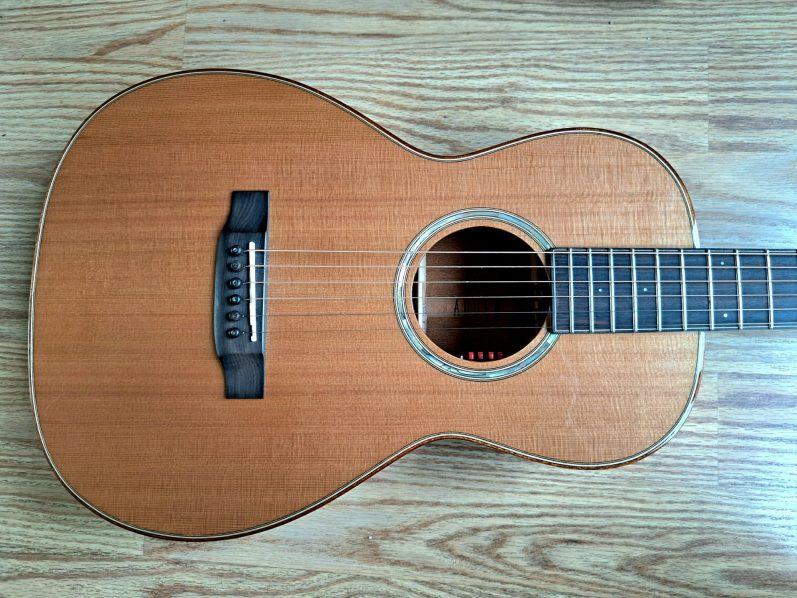
The parlour guitar body shape gives a clear, focused tone, and can actually sound louder than than a larger guitar. They tend to be more midrange focused and can sound quite 'boxy' rather than boomy, due to the tiny waist, although this particular instrument is my Auden Emily Rose Artist, which was designed with a deeper body (from top to back) to give it more internal space, and the resulting tone is much more balanced, with considerably more bass response than one might
normally expect from the parlour body size. I bought this guitar as it is very comfortable to play if you have basal thumb arthritis; the 12th fret neck join adds to that comfortable playability.
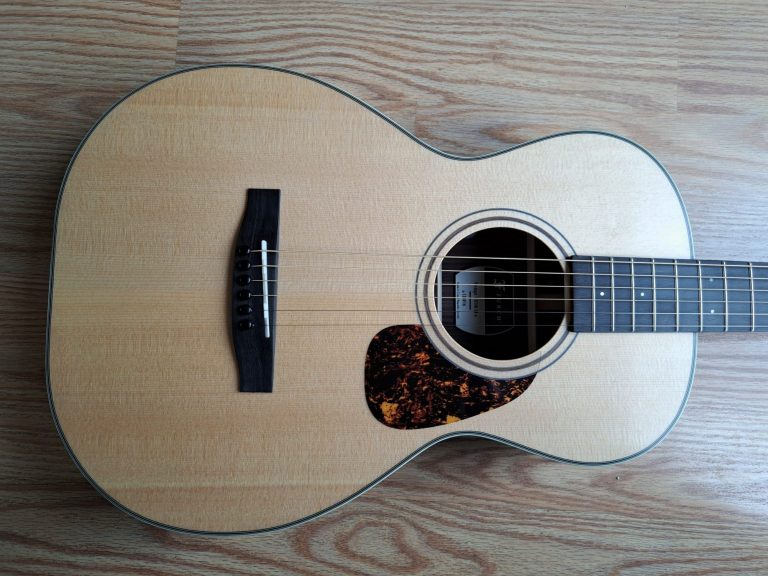
The 00 gives more volume and projection, but retains the clarity of tone. Sitting between the tiny Parlour
guitar and the Concert body shape, the 00 is perhaps not the most common body size (although Martin has been making them for a very long time), they are
comfortable to play and typically the neck joins the body at the 12th fret.
The guitar in the photo is my Furch Vintage 00-SR in Sitka Spruce and Indian Rosewood, and has a really warm tone without any 'muddiness', and is a real pocket powerhouse of an instrument.
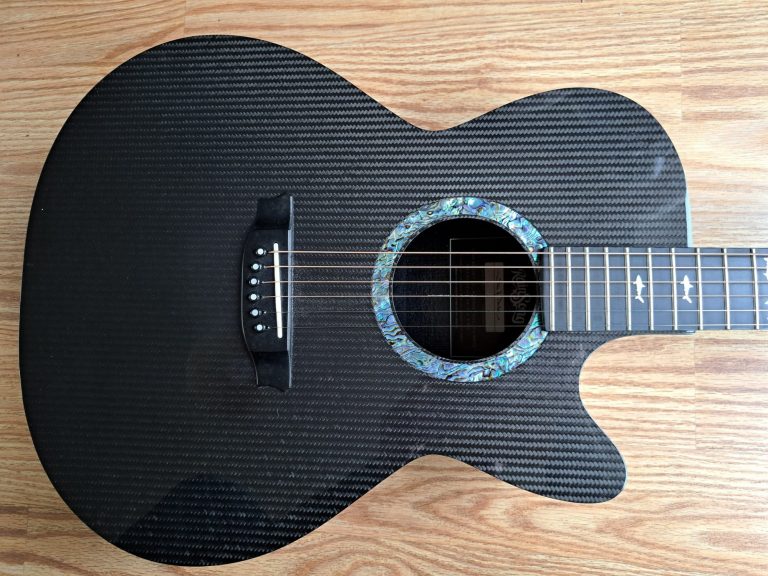
Concert body guitars offer precision and increased volume, and are popular with fingerstyle players for their balance between the clarity of the smaller bodied
instruments, and the the volume of a larger guitar.
They are very close in design to the OM and 000 body sizes, but generally have a tighter waist, which focuses the tone. The Concert guitar has a body join at the14th fret, and thus allows access higher up the fingerboard - again perfect for fingerstyle players.
This guitar is the Rainsong Windsong-1000 Concert, and the all carcbon fibre construction exponentially
increases all of the attributes of this body shape.
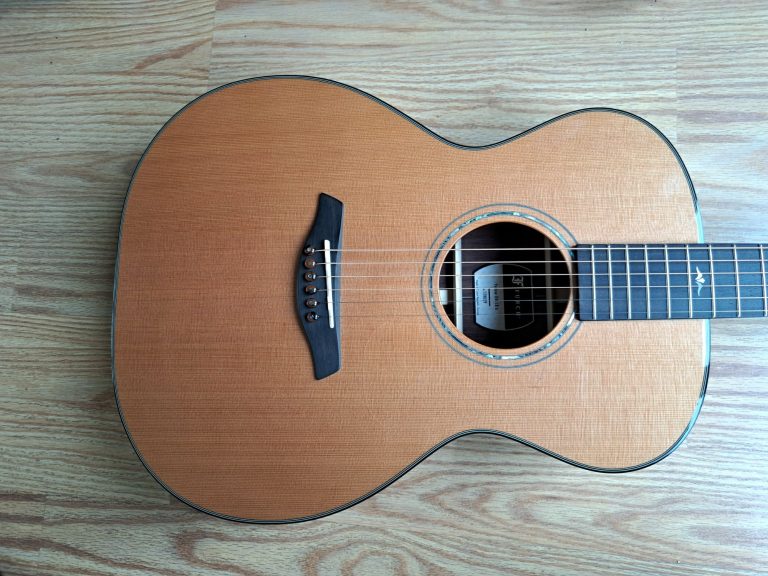
Often considered the most versatile of body shapes, the OM /000 gives a balanced tone and produces more bass response and volume. The 000 typically has a shorter scale length e.g. 24.75" though the Martin 000-15m is a notable exception. The OM is usually 25.5" scale length, offering versatility, a word that probably describes the OM perfectly - this is a most versatile guitar. The one pictured here is a Furch Yellow OM-CR, with a Western Red Cedar top and Indian Rosewood back and sides. It handles both fingerstyle and strumming with ease.
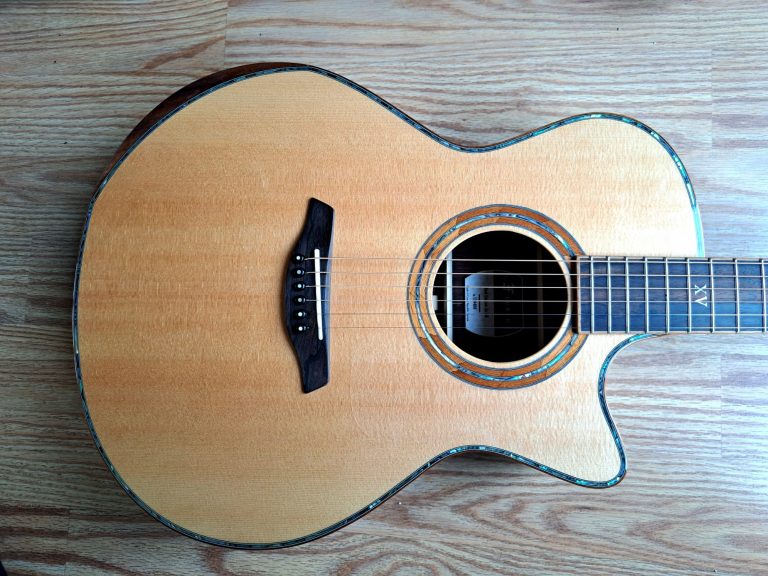
The Grand Auditorium has a lower bout that is close to the size of a Dreadnought, though the depth is reduced and the waist is more pronounced, giving what many consider to be the ultimate compromise between bass projection and tonal clarity. It's hard to argue against that point of view, and I personally love this body size/shape, which is my own 'happy medium' between a larger guitar and the precision of a Concert sized instrument.
This guitar here is my Furch Red Deluxe GC-SR, in Sitka Spruce and Indian Rosewood, and gets positive comments about its tone wherever I play live.
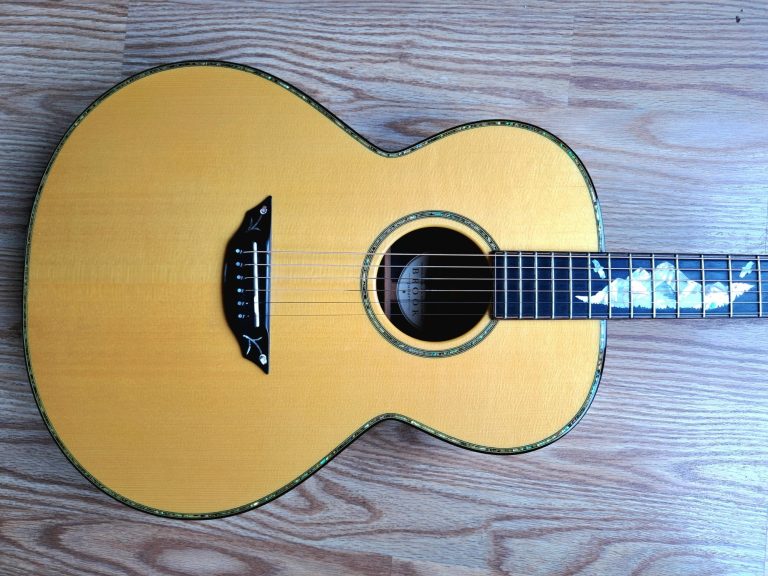
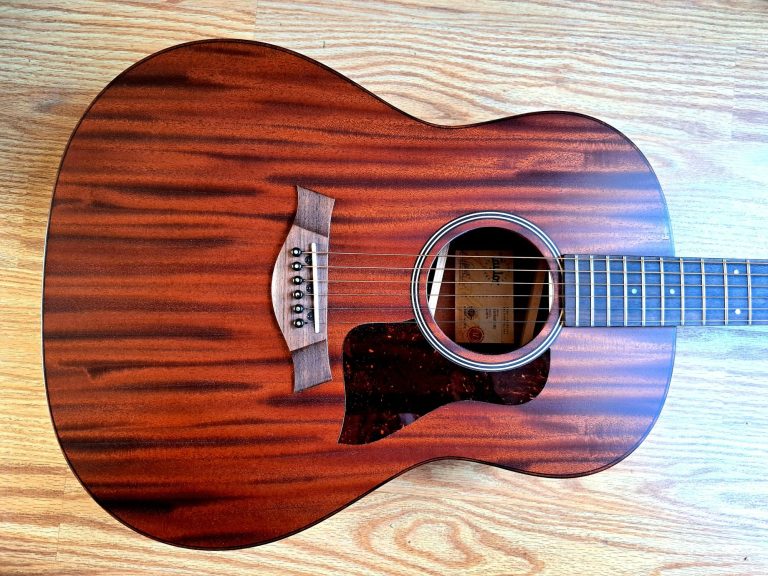
Providing more bass than the Grand Auditorium, the Mini Jumbo provides a nice compromise for the player wanting a deeper tone whilst retaining comfort and avoiding boominess. You can see the pronounced waist on this guitar, which tightens the tone, whilst the large lower bout adds bass and volume.
This particular guitar is my Brook Tamar, built in 2003, and which remains one of my most treasured
instruments. It was made in tribute to my parents, who passed within 8 months of each other in 2002 and 2003. The headstock has a juvenile Golden Eagle, which my Dad always longed to see, and the bridge has roses - my Mum's rose still grows in my garden.
Dreadnoughts are the bluegrass player's mainstay; with huge projection and a boomy bass, this body shape is probably still the most popular. Sometimes
described as 'cannons' the dreadnought is a powerful instrument, and perhaps most commonly associated with flatpicking and strumming rather than fingerstyle, although they can possess a sweetness that belies their shape and size. The guitar is bell-shaped, and the lower bout is both wide and deep.
The one pictured here is my Taylor AD27e, which
honestly doesn't get played enough because my music isn't really in the genre best suited to this body shape.
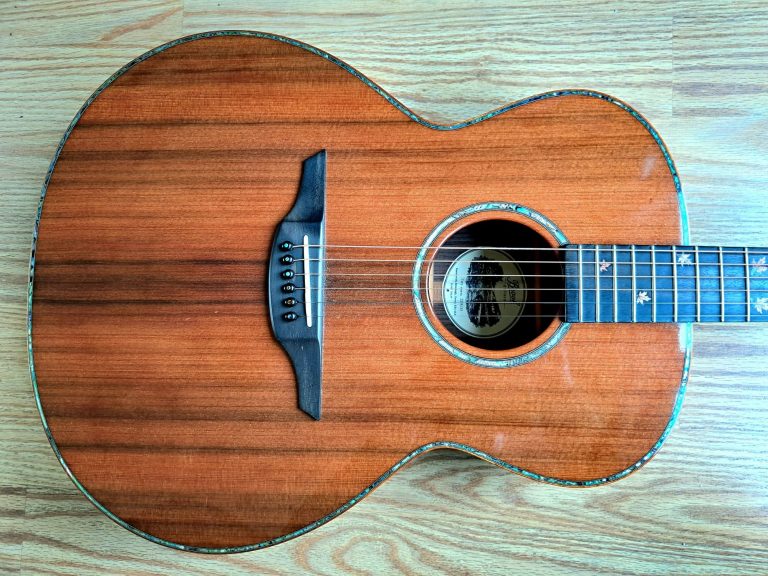
The Jumbo (and larger relative, the Super Jumbo)
produces the greatest volume and bass of the guitars described here. The distinctive waist again reduces over-boominess, whilst the very large and deep lower bout gives great warmth and projection.
Jumbo guitars are wonderful to play, and their dynamic range is remarkable, but they are perhaps not so suited to curling up with on the sofa, which is where a smaller bodied instrument offers more comfort. This guitar here is my Brook Tavy, 'Autumn'; it's become one of my best friends in the short time I've had it. Built for me, to my specification, and a precious 'tool of my trade'.
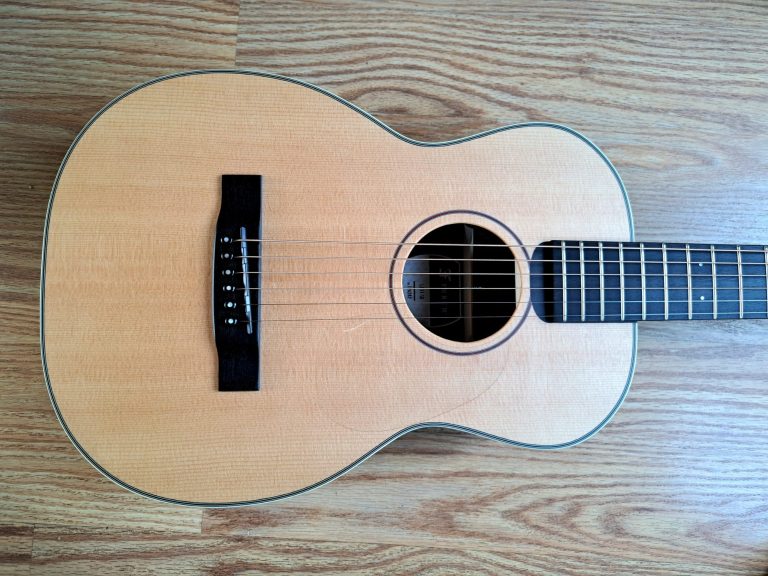
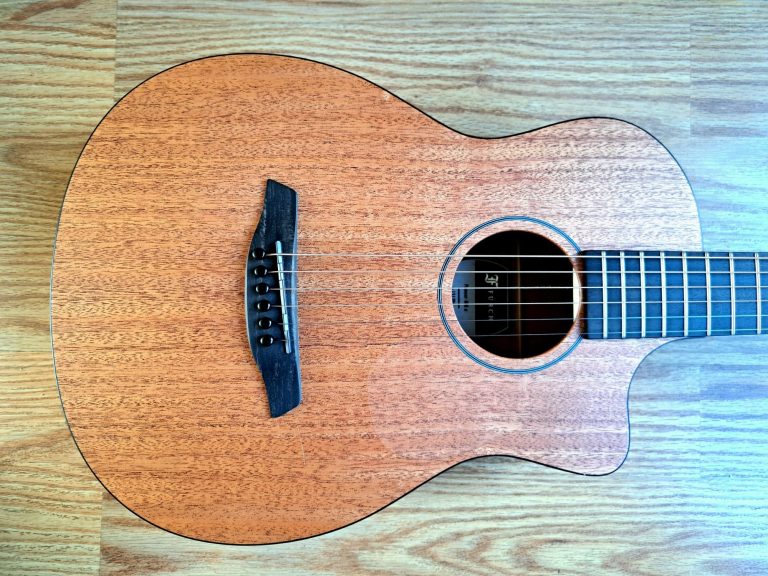
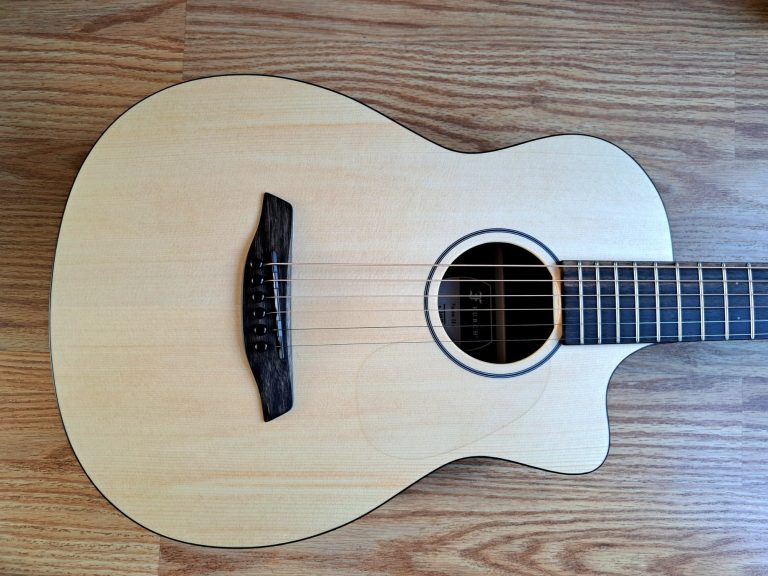
The Travel Guitar isn't really a 'traditional' body shape, but they deserve to be here. Small, compact, and in some cases sounding boxy and compressed, the Travel Guitar is about flexibility and portability, and
often is made from laminated woods as it may be seen as a 'knockabout' instrument. The ones here, however, are built entirely from solid woods, with the tops
individually voiced for premium quality tone. The one to the left is my Furch Little Jane (which dismantles!), and the two below are Furch Pioneers, which come with Furch's incredible 'Booster Soundport' in the side, which means the player can hear the guitar's tone clearly. The tone of the Little Jane is so impressive, and it's my go-to guitar if I have an overseas gig; the Pioneers are perfect for the beach, the campfire, pretty much anywhere - all three of these small instruments sound like MUCH larger guitars. In my opinion, every player should own one good travel guitar.